The Revolution Will Not Be Prompted: Why AI's Future Lies in Expert-Encoded Decision Logic
Harish Alagappa
Nov 28, 2025
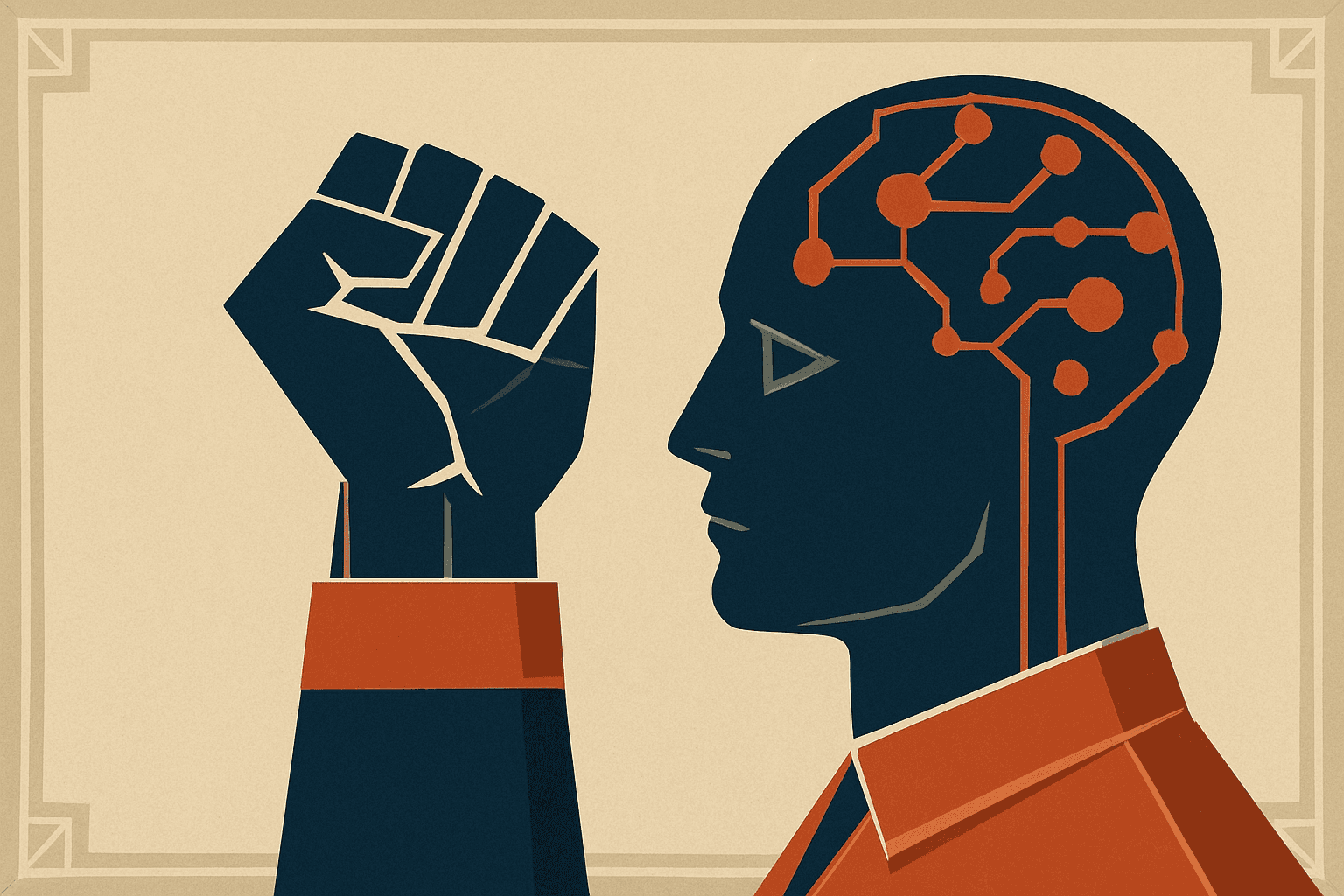
Discover why prompt-dependent AI can't scale enterprise operations. Learn how expert-encoded decision logic creates reliable, auditable AI systems that scale beyond prompting.
The AI revolution everyone's talking about has a dirty secret: it's not actually scalable. While the tech world celebrates ChatGPT's conversational prowess and GPT-4's impressive reasoning, enterprise leaders are discovering a harsh reality—AI that requires constant prompting and hand-holding simply can't scale to meet real business demands.
The Prompting Problem: Why Current AI Hits a Wall
Think about it: if your AI system needs a human to craft perfect prompts for every decision, provide endless context, and constantly adjust its responses, how is that different from having a very expensive intern? The current paradigm of AI automation relies heavily on prompt engineering, creating a bottleneck that defeats the entire purpose of automation.
Major enterprises are spending millions on AI initiatives only to discover that their systems require armies of prompt engineers, constant supervision, and produce inconsistent results. When your AI gives different answers to the same question depending on how it's asked, you don't have automation—you have an expensive guessing game.
The Missing Piece: Expert Decision Logic
Here's what the current AI narrative gets wrong: the assumption that intelligence emerges from training on internet data. Real business intelligence doesn't come from scraping Reddit threads or Wikipedia articles—it comes from decades of expert judgment, institutional knowledge, and domain-specific reasoning that can't be replicated through statistical pattern matching.
The future of enterprise AI governance isn't about better prompts or more training data. It's about encoding the actual decision logic that experts use every day. Instead of teaching AI to mimic human language, we need to teach it to replicate human judgment.
Enter Expert-Taught AI: The Infrastructure Revolution
This is where the real revolution begins. Expert AI systems work fundamentally differently from traditional LLMs. Instead of relying on probabilistic outputs that require constant human interpretation, they encode explicit decision frameworks that experts can define, test, and validate.
Imagine a system where:
Domain experts can directly encode their decision-making processes without writing code
Every AI decision includes a complete AI audit trail showing exactly how conclusions were reached
AI compliance is built-in because the reasoning is transparent and auditable
Systems scale because they operate on defined logic, not unpredictable prompts
This isn't about replacing human expertise—it's about amplifying it. KnowledgeOps represents a fundamental shift from training AI on generic data to teaching it specific, expert-validated reasoning patterns.
The Teach-Test-Trust Framework
The path forward requires a structured approach to AI decision automation:
Teach: Domain experts encode their decision-making processes through examples and rule structures, creating human-defined AI logic that reflects real-world expertise.
Test: Every decision framework undergoes rigorous validation, ensuring consistency and accuracy before deployment. This creates judgment-based AI that businesses can actually rely on.
Trust: With transparent reasoning and consistent outputs, organizations can deploy AI systems that meet regulatory requirements and business standards without constant oversight.
Why This Matters for Enterprise Scale
Traditional AI approaches create what we call "prompt debt"—the accumulated cost of maintaining, updating, and supervising AI systems that can't operate independently. Scalable AI infrastructure requires systems that can make consistent decisions without human intervention.
Expert-encoded systems eliminate this debt by creating AI reasoning frameworks that operate on defined logic rather than statistical guesswork. When your AI system knows why it makes decisions—and can explain those decisions in auditable terms—you've moved beyond automation theater to genuine business transformation.
Building the Infrastructure for Expert Intelligence
The companies that will dominate the next phase of AI aren't those with the largest language models—they're the ones building infrastructure that captures, tests, and scales expert reasoning. This requires platforms designed specifically for no-code AI development, where subject matter experts can directly encode their knowledge without technical intermediaries.
Braigent represents this infrastructure layer—the foundation that enables organizations to move beyond prompt-dependent AI toward systems that scale expert judgment. It's not about replacing human intelligence; it's about creating the tools that allow human expertise to operate at machine scale.
The revolution won't be prompted because the future of AI isn't about better conversations—it's about better decisions. And better decisions come from encoding the expertise that already exists in your organization, not from training models on the internet's collective knowledge.
The question isn't whether AI will transform business operations. The question is whether you'll build that transformation on the shaky foundation of prompts and probabilistic outputs, or on the solid ground of expert-encoded decision logic.
The AI Revolution Will Not Be Prompted
The AI Revolution Will Be Taught